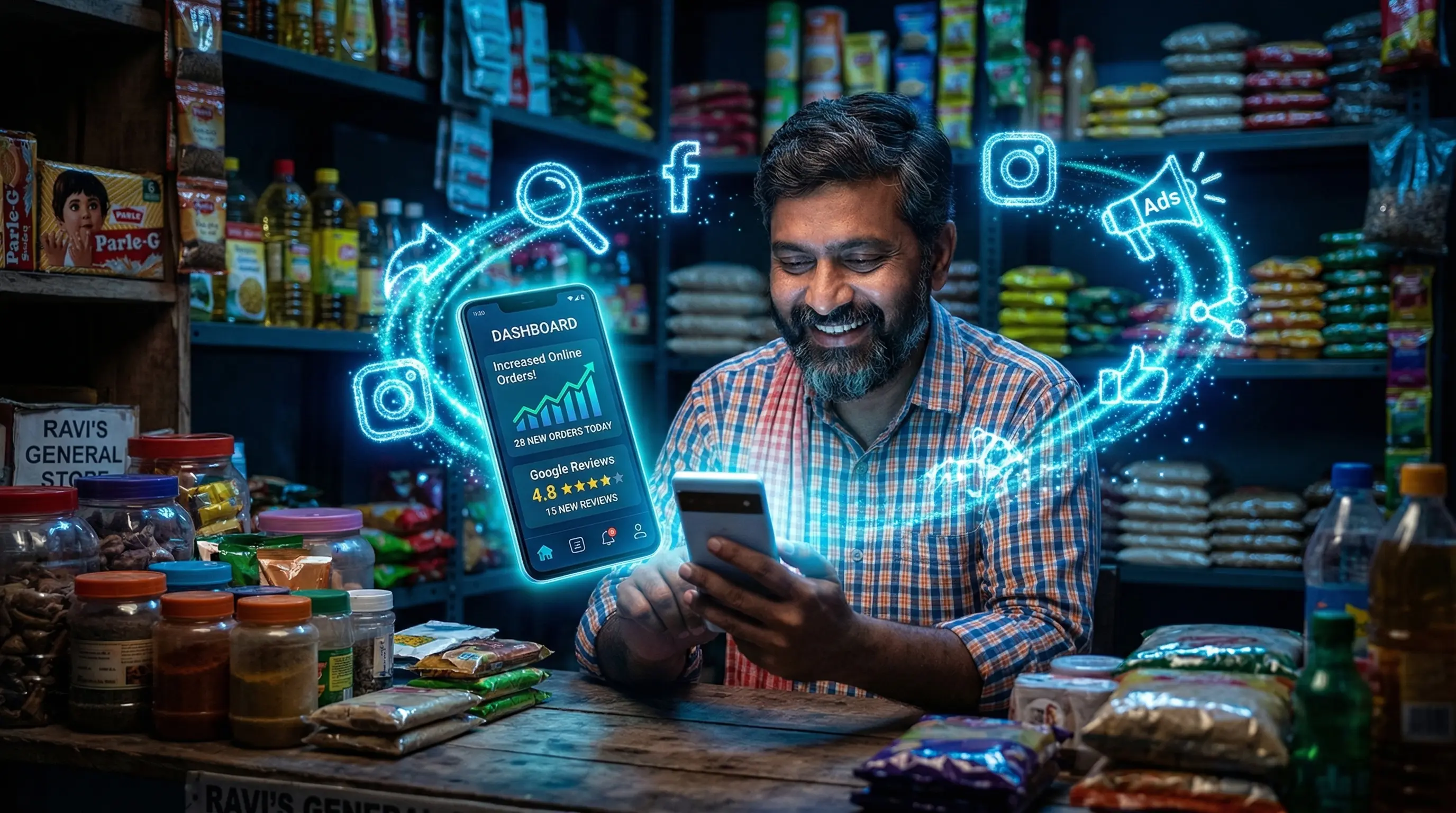
If you're running a small business in India—be it a kirana store in Mumbai, a boutique in Jaipur, or a service provider in Bengaluru—you might think a website is a luxury. But in 2026, that mindset is not just outdated; it's dangerous. With over 900 million internet users and a digital economy that's projected to cross $1 trillion, having an online presence is the baseline. Not having a website is like closing your shop for 12 hours a day while your competitors stay open 24/7.
I've seen this firsthand at Larwell Technologies, where we help businesses build their digital footprint. Here's why a website is no longer optional—and how it can transform your small business.
1. The Digital-First Consumer is Here
India's internet penetration has skyrocketed, thanks to affordable data and smartphones. According to a recent report, over 70% of consumers research a business online before making a purchase decision. If you don't have a website, you're invisible to them. Even if you have a social media page, a website adds legitimacy and provides a controlled, professional space to showcase your products or services.
2. Building Trust and Credibility
A professionally designed website signals that you're serious and established. It's where customers can find your story, testimonials, certifications, and detailed information. In a market like India, where trust is paramount, a website acts as your digital handshake. It's often the first impression, and you don't get a second chance.
3. Cost-Effective Marketing and 24/7 Availability
Traditional advertising—newspaper ads, hoardings, pamphlets—is expensive and limited. A website, combined with simple SEO and content marketing, can attract customers at a fraction of the cost. Moreover, your website never sleeps. It can take orders, answer queries through chatbots, and generate leads even when you're off for the day. This is critical in a post-pandemic world where consumers expect on-demand access.
4. Local SEO: Be Found When It Matters
When someone searches "best tailor near me" or "plumber in Pune", Google's local pack shows businesses with a strong online presence. A website optimized for local keywords, with your Google Business Profile linked, can drive high-intent traffic. Many small Indian businesses still overlook this, leaving a massive opportunity for those who act early. Even a simple one-page site with your address, phone number, and services can put you ahead.
5. Competing with Giants and Neighbors
E-commerce platforms and aggregators have conditioned Indian consumers to expect information at their fingertips. If your competitor down the street has a website and you don't, you're losing out. A website allows you to present your unique value proposition, unlike where you're just one of many. It's the great equalizer—a well-crafted website can make a small enterprise look as professional as a large corporation.
6. E-Commerce and Direct Sales
Even if you're not selling online, a website can integrate simple payment gateways for bookings or orders. The pandemic accelerated digital payments; UPI transactions crossed 100 billion in 2025 alone. By 2026, not offering an online transaction option is a deal-breaker for many. You don't need a full-blown e-commerce store; a basic setup with a payment link can work wonders.
7. Data Ownership and Independence
Relying solely on social media or third-party platforms means you're building on rented land. Algorithms change, accounts get hacked, or platforms lose relevance. Your website is your digital property. You own the data, the traffic, and the customer relationships. It's an asset that appreciates over time as you add content and optimize.
8. Mobile-First Imperative
In India, the majority of internet access is mobile. A responsive, fast-loading website is no longer a nice-to-have. Google's mobile-first indexing means your site's mobile version determines your search ranking. With the rollout of 5G, consumers expect instant load times. A mobile-optimized site ensures you capture the vast mobile-native audience.
Getting Started Is Easier Than You Think
Many small business owners fear the cost and complexity. But tools like WordPress, Shopify, or even simple static sites can be set up affordably. At Larwell Technologies, we specialize in creating scalable web solutions—from Laravel backends to React frontends—tailored for Indian SMBs. The key is to start simple: clear branding, essential info, contact details, and a blog or portfolio.
The Bottom Line
In 2026, a website is not a technical indulgence; it's the foundation of your business's visibility and growth. It's your storefront, your salesperson, and your credibility engine rolled into one. Don't get left behind in India's digital revolution. Whether you're a sweet shop in Kolkata or a coaching center in Delhi, the internet is where your next customer is looking for you. Be there.